Air Conditioning Repair and Tune-Up Service Questions
Air conditioning has a talent for failing at exactly the wrong moment. Not during the mild week when everyone is feeling reasonable and wearing light sweaters. No, it waits until the house feels like a baked potato and the thermostat has become a small rectangular object of betrayal.
That is usually when the questions start.
Is this an air conditioning repair problem or a tune-up problem? Should you call an air conditioning contractor, an electrician, a plumber, or someone with a van full of mysterious gauges? Is the system low on refrigerant, or is that just something people say when they do not want to admit they ignored the filter for six months? And why does the outdoor unit sound like it is trying to launch itself into low orbit?
Good questions. The best service calls often begin with them.
Air conditioning repair and air conditioning maintenance sit inside a larger trade family that includes heating, ventilation, and air conditioning work. Many contractors also handle connected plumbing or electrical tasks tied to heating and cooling equipment, though electrical work is its own specialty and should be treated with proper respect. A good contractor knows the boundaries. A great one knows when to bring in the right specialist instead of pretending every wire, drain, compressor, pipe, and flame sensor is just “basically the same thing.”
Let’s sort through the questions homeowners and property managers ask most often, with enough plain talk to be useful and enough trade realism to avoid the usual brochure fog.
Is an air conditioning tune-up the same as air conditioning repair?
No, though they do bump into each other like shopping carts in a crowded hardware store.
An air conditioning tune-up is preventive service. The goal is to inspect, clean, adjust, and verify that the system is operating as it should. It is the HVAC equivalent of checking tire pressure, oil level, brakes, and lights before a road trip. You may not find anything dramatic. That is part of the point.
Air conditioning repair, on the other hand, happens when something is already wrong. Maybe the system will not start. Maybe it runs but does not cool. Maybe it trips a breaker, leaks water, rattles, freezes, or turns the living room into a humid waiting room. Repair work focuses on diagnosing and correcting a fault.
The tricky part is that tune-ups often uncover repair needs. A technician may arrive for air conditioning maintenance and find a worn component, an airflow issue, a refrigerant charge concern, or an electrical problem tied to the cooling equipment. That does not mean the tune-up “caused” the issue, despite the suspicious timing. It means someone finally looked under the hood.
A reputable air conditioning repair service should explain the difference clearly. Maintenance is not a magic spell. Repair is not a punishment. Both are tools, and using the right one saves money, comfort, and occasionally a homeowner’s faith in machinery.
What should I ask before scheduling service?
The first question is not “How cheap can you do it?” Tempting, yes. Wise, no. Air conditioning systems are specialized equipment, and poor service can create more trouble than the original complaint. Proper installation and maintenance matter because sizing, refrigerant charging, airflow, and associated electrical or plumbing work all affect performance.
Before scheduling, ask what kind of work the company actually performs. Some businesses focus strictly on cooling. Others work across heating and cooling as a heating contractor or air conditioning contractor. Some also provide plumbing services, water heater repair, drain cleaning, or related work. That broader skill set can be helpful when a cooling issue overlaps with condensate drainage, electrical connections, or heating equipment, but it should never become a license for guesswork.
A sensible set of questions sounds like this:
- Do you service and maintain the type of air conditioning or heat pump system I have?
- Are your technicians qualified to handle refrigerant-related service where required?
- Will you diagnose the issue before recommending replacement?
- Can you explain whether this is repair work, maintenance, installation, or another trade issue?
- If electrical, plumbing, or gas work is involved, do you have the proper specialist for that portion?
That is one short list, and it earns its keep. The answers reveal whether you are dealing with a service company or a sales script wearing work boots.
Why does refrigerant come up so often?
Refrigerant is central to air conditioning, so it gets blamed for nearly everything. Sometimes fairly. Sometimes with the accuracy of a weather forecast made by a squirrel.
Air conditioners and heat pumps rely on refrigerant to move heat. When the charge is not correct, the system may run poorly, use more energy, or face a higher risk of failure. Proper charging is part of quality installation and service. It is not a casual top-off, and it is not something to handle like adding washer fluid.
There are also rules around refrigerants. Air conditioners and other refrigeration equipment fall under regulatory definitions for appliances, and technicians involved in maintenance, service, repair, or installation may need appropriate certification for refrigerant work. The practical takeaway is simple: if refrigerant is part of the conversation, you want a qualified technician, not a cousin with a hose and heroic confidence.
A low refrigerant condition also deserves diagnosis. Refrigerant does not get “used up” like gasoline. If a system is low, the underlying reason matters. The repair discussion should not stop at “we added some.” It should address why the charge was off, what was checked, and what options make sense.
Can a tune-up lower my energy use?
It can help, especially when the system has drifted away from proper operation. No honest technician should promise a specific savings number for every home because houses, equipment, ductwork, climate, usage habits, and installation quality all vary. Anyone who guarantees miracle savings before seeing the system may also have a bridge, a diet tea, and a timeshare to discuss.
What is defensible is this: correct equipment sizing, proper refrigerant charging, and quality installation affect energy use and failure risk. Maintenance helps keep operating conditions closer to where they should be. Clean components, proper airflow, sound electrical connections, and accurate operating checks can make the difference between a system doing its job efficiently and one sweating through the work like it forgot its lunch.
A tune-up will not fix a badly oversized or undersized system. It will not undo poor commercial electrician duct design by sheer optimism. It will not make ancient equipment young again, though it may help it behave better. Think of air conditioning maintenance as discipline, not resurrection.
How do I know whether I need repair or replacement?
This is where judgment matters.
A failed part does not automatically mean the entire system should be replaced. At the same time, repeatedly repairing old or poorly performing equipment can become the mechanical version of feeding coins into a parking meter that never stops flashing red.
A good air conditioning repair service should consider the nature of the failure, the condition of the equipment, the quality of the original installation, and whether the system is still suitable for the space. If replacement enters the conversation, sizing should come up quickly. Proper equipment sizing is not a decorative detail. It is one of the fundamentals of quality HVAC installation.
Bigger is not automatically better. An oversized air conditioner can create comfort problems because cooling is not just about dropping temperature. Humidity matters. Runtime matters. Airflow matters. A system that blasts cold air briefly and shuts off may impress the thermostat while leaving the room feeling clammy and uneven. Small systems have their own obvious problem: they may struggle to keep up.
Heat pump installation raises similar sizing and setup questions. Heat pumps provide heating and cooling, so the contractor needs to think about both sides of the comfort equation. That is heating contractor territory as much as air conditioning contractor territory, and it rewards people who design before they install.
What does plumbing have to do with air conditioning?
More than people expect, but less than some marketing departments imply.
Air conditioning systems remove moisture from indoor air, and that moisture has to drain. When condensate drainage fails, water can show up where it does not belong. At that point, the homeowner may wonder whether to call an HVAC technician, a plumber, or a priest.
The answer depends on the setup and the failure. If the issue is directly tied to the air conditioning equipment and its condensate line, an HVAC technician may handle it. If the problem connects to a broader drain issue, a plumber may be the better call. Some service companies offer both HVAC and plumbing work, which can reduce finger-pointing. Finger-pointing, while popular, has poor drainage characteristics.
Plumbing leak repair, drain cleaning, rooter service, and hydrojetting belong more clearly to plumbing and sewer work than to standard air conditioning service. Septic system service is its own specialized area. Water heater repair, water heater installation, plumbing repiping, and water softener installation are also plumbing services, even if the same company brand offers HVAC in another department.
The important thing is not the logo on the van. It is whether the person performing the work is qualified for that exact task.
When should an electrician be involved?
Air conditioning uses electrical power, controls, motors, and safety devices. HVAC technicians commonly service electrical components associated with heating and cooling equipment. But electrical work is separately classified for a reason. There are times when an electrician should be involved, especially when the concern reaches beyond the equipment itself into panels, circuits, service capacity, or broader wiring issues.
If a cooling system repeatedly trips a breaker, the air conditioning repair technician may be able to identify whether the equipment is causing the problem. But replacing or altering electrical infrastructure may require an electrician. The same goes for projects where lighting contractor work, wiring upgrades, or dedicated circuits become part of a larger property improvement.
The cleanest projects happen when trades coordinate instead of competing. An air conditioning contractor does not become less professional by saying, “This portion needs an electrician.” That sentence is often the sound of competence.
What about heating, furnaces, and gas work?
Cooling questions often uncover heating questions because many homes use combined comfort systems. The same contractor may provide air conditioning maintenance in spring and furnace repair service in fall. A heating contractor may also install or service equipment connected to ventilation, controls, and distribution.
Gas installation service deserves particular caution. Gas work is not an area for improvisation, “pretty sure,” or “my neighbor did one of these once.” If a system involves gas piping, combustion equipment, venting, or furnace repair, the contractor should be qualified for that work. Heating equipment installation and furnace repair sit within the broader plumbing, heating, and air conditioning trade world, but they carry their own safety and code concerns.
Air conditioning tune-up questions may seem separate from furnace issues until you consider shared blowers, ductwork, thermostats, and controls. A weak blower affects cooling. A control issue may affect both heating and cooling. A tune-up visit is a useful time to ask whether the whole comfort system is behaving properly, not just whether cold air comes out when requested.
What are the signs I should call for service?
Air conditioners are not subtle when they are truly unhappy, but they do offer early clues. Ignoring those clues is a popular homeowner sport, usually followed by sweating and regret.
Here are the service signs worth taking seriously:
- The system runs but does not cool the space adequately.
- Airflow from vents feels weak or uneven.
- The unit makes new grinding, buzzing, rattling, or squealing sounds.
- Water appears near indoor equipment or where it should not be.
- Breakers trip, controls fail, or the system starts and stops abnormally.
That is the second and final list. It is short because most air conditioning symptoms fit into those buckets. The details still matter. A weak airflow complaint can point to a filter, blower, duct restriction, coil condition, or design issue. Water near the unit can be a drainage issue, an installation issue, or an operating condition that needs diagnosis. Noise can be harmless vibration or an expensive part waving a tiny white flag.
A service call should narrow the possibilities, not merely rename the symptom in invoice language.
Why do some air conditioning problems come back?
Recurring problems are where patience goes to die.
A repair may fail to last because the original diagnosis was incomplete. It may also be that the visible failure was only a symptom. For example, replacing a damaged component without addressing the condition that damaged it is like mopping under a sink while the faucet is still running. Admirable wrist motion, poor strategy.
Recurring cooling issues can also stem from installation quality. Correct sizing and proper refrigerant charging are not luxuries. They influence comfort, energy use, and failure risk. A system that was poorly installed may be difficult to keep healthy with repairs alone. Maintenance helps, but it cannot rewrite every mistake.
This is why experienced technicians ask nosy questions. How long has this been happening? Did anyone work on the system recently? Does the problem occur only in extreme weather? Does it happen during cooling, heating, or both? Has the home had renovations, insulation changes, or equipment replacement? These questions are not chit-chat. They are diagnostic tools wearing casual clothes.
Should I get annual air conditioning maintenance?
For most systems, regular maintenance is sensible. The exact schedule can depend on equipment type, usage, climate, manufacturer guidance, and site conditions. A system that runs heavily may need more attention than one used lightly. A property with dust, pets, renovation debris, or clogged filters may not enjoy the same maintenance interval as a pristine showroom where nobody apparently lives.
The bigger point is consistency. Air conditioning maintenance gives a technician a chance to inspect equipment before peak demand. It can catch developing issues, verify operation, and keep the system cleaner and better adjusted. It also creates service history, which helps future diagnosis.
Skipping maintenance does not guarantee failure. Machines can be surprisingly tolerant, right up until they become expensive. The problem is that neglect tends to compound. Dirt affects airflow. Poor airflow affects performance. Poor performance stresses components. Components under stress eventually express themselves, usually by stopping on the hottest afternoon available.
How much should I expect a technician to explain?
Enough that you understand the decision, not so much that you can pass a certification exam by dinner.
A professional technician should be able to describe what was checked, what was found, and what the options are. If repair is recommended, you should understand what failed and why the proposed work addresses it. If replacement is recommended, you should hear about sizing, installation quality, refrigerant charging, and how the new system fits the home or building.
Beware of both extremes. The technician who offers no explanation may be hiding weak diagnosis, poor communication, or a stopwatch culture that values speed over clarity. The technician who buries you in jargon may not be helping either. “Your capacitor tested out of range” is useful if paired with plain meaning. “The unit has electrical issues” is too vague unless followed by specifics.
Good explanations are not theatrical. They are practical. They leave you feeling informed rather than cornered.
Can an air conditioning contractor handle everything in my house?
No single trade should claim the entire building like a conquering empire.
An air conditioning contractor specializes in installing and maintaining heating, ventilation, and air conditioning equipment. Many HVAC contractors provide repairs, duct cleaning, installation, maintenance, and associated work connected to cooling and heating systems. Some companies also employ plumbers, electricians, or other specialists, which allows them to offer plumbing leak repair, drain cleaning, water heater installation, furnace repair service, or heat pump installation under one roof.
But categories matter. A plumber handles plumbing systems. An electrician handles electrical systems. A septic system service provider handles septic work. A lighting contractor handles lighting work. A gas installation service should be performed by someone properly qualified for gas work. Overlap exists, especially where equipment connects to plumbing or electrical systems, but overlap is not the same as universal expertise.
The homeowner’s job is not to memorize trade classifications. It is to ask, “Who will perform this work, and are they qualified for this specific task?” That question has saved more trouble than any coupon ever printed.
Why does proper installation matter if I only need repair?
Because repair quality is limited by the system it inherits.
A well-installed system gives the technician a fighting chance. Equipment sizing makes sense. Refrigerant charge can be verified against proper operating conditions. Airflow has a path. Controls are understandable. Access is reasonable. The service panel is not blocked by a shrub that appears to have eaten a rake in 2017.
A poor installation can make every future visit harder. The system may cool unevenly, short-cycle, run inefficiently, or fail prematurely. A repair technician can sometimes correct installation-related problems, but not always with a simple part replacement. At times, the honest recommendation may be redesign, replacement, or additional work beyond the original complaint.
This is why a cheap installation can become an expensive hobby. The invoice may look friendly on day one, but the system keeps sending postcards from the land of consequences.
What should I do before the technician arrives?
You do not need to prepare a shrine to the condenser. A few practical steps help.
Make sure the technician can access indoor and outdoor equipment. If there are pets, secure them kindly. Dogs often believe HVAC bags contain either treats or enemies. Clear stored boxes away from mechanical equipment if safe to do so. Know where the thermostat is. If the system has been doing something odd, write down when it happens and what you noticed.
Do not reset everything repeatedly right before the appointment if you can avoid it. Fresh symptoms are easier to diagnose than a system that has been power-cycled into temporary politeness. If a breaker trips, do not keep forcing it back on. That is not troubleshooting. That is negotiating with electricity, and electricity has a poor sense of humor.
If water is leaking, protect flooring and belongings if possible, then explain exactly where the water appeared. If the system made a sound, describing it helps. “Buzzing near the outdoor unit,” “metallic scraping,” and “a squeal when it starts” are better than “it sounded expensive,” though the last one is often emotionally accurate.
How should I compare service companies?
Look for clarity, competence, and scope fit. A company that offers air conditioning repair service should be comfortable discussing maintenance, diagnosis, refrigerant handling, installation quality, and when replacement makes sense. If your issue may involve plumbing, electrical, heating, gas, or drainage work, ask whether they handle that internally or coordinate with the proper trade.
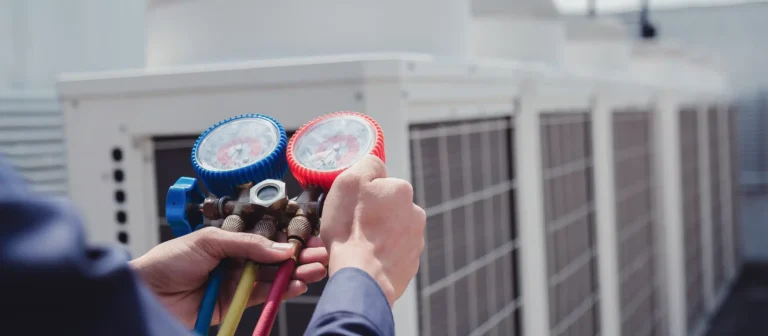
A business centered on plumbing and HVAC may be a good fit for properties where systems interact. For example, a home might need air conditioning maintenance now, water heater repair later, and furnace repair service before winter. Having one company that understands multiple mechanical systems can be convenient. Convenience, however, should never outrank qualification.
The best contractors are not the ones who promise everything. They are the ones who know what they do well, explain it plainly, and bring the right person to the right problem.
The questions worth asking every time
The most useful air conditioning questions are rarely fancy. What is wrong? Why did it happen? What are my options? Is this urgent? What happens if I wait? Is this repair connected to installation quality, maintenance history, electrical supply, drainage, or another trade?
Those questions turn a service call from a guessing game into a professional conversation.
Air conditioning repair and tune-up service sits in a practical, specialized corner of the building trades. It overlaps with heating, ventilation, electrical connections, plumbing drainage, refrigerant rules, and sometimes gas or water systems. That overlap is exactly why clear diagnosis matters. The house does not care which department name appears on the invoice. It only cares whether the system works safely, efficiently, and reliably.
And if the air conditioner chooses the hottest day of the year to develop a personality, at least you will know what to ask before everyone starts glaring at the thermostat like it owes them money.
Name: Service Lion Plumbing Heating Air Electric
Address: 521 W Briardale Ave, Orange, CA 92865, United States
Phone: (657) 567-7305
Website: https://callservicelion.com/
Email: [email protected]
Hours:
Monday: Open 24 hours
Tuesday: Open 24 hours
Wednesday: Open 24 hours
Thursday: Open 24 hours
Friday: Open 24 hours
Saturday: Open 24 hours
Sunday: Open 24 hours
Open-location code: R48R+WV Orange, California, USA
Map/listing URL:
https://www.google.com/maps/search/?api=1&query=Google&query_place_id=ChIJQU4LBWHV3IARtnABtyykSA4
Google Map:
Socials:
https://www.facebook.com/ServiceLionCA/
https://www.youtube.com/channel/UCR_L35QzsRTxYZtX8PxJvPw
Local Service Information
Service Lion Plumbing Heating Air Electric provides plumbing, drain, heating, air conditioning, and electrical services from its Orange, California location.The company serves homeowners and properties throughout Orange and communities across Orange County and surrounding areas.
Available services include plumbing repairs, water heater work, drain and sewer services, heating and cooling service, electrical repairs, panels, lighting, outlets, and related home-system work.
Service is available for residential properties as well as light commercial needs described within the company's local service-area information.
The company's website emphasizes locally operated service, coordinated home-system support, and practical scheduling for plumbing, HVAC, and electrical needs.
The matching public business listing shows the Orange location as open 24 hours a day, seven days a week.
For service information or scheduling, call (657) 567-7305 or visit https://callservicelion.com/.
The public map listing identifies the business at 521 W Briardale Ave, Orange, CA 92865 and can be used for location and direction information.
Popular Questions About Service Lion Plumbing Heating Air Electric
What services does Service Lion Plumbing Heating Air Electric provide?
The company provides plumbing, drain and sewer, heating, air conditioning, and electrical services. Its published services include plumbing repair, water heaters, drain clearing, sewer work, HVAC repair and installation, electrical repairs, panels, circuit breakers, lighting, outlets, and related services.
Where is Service Lion Plumbing Heating Air Electric located?
The matching business location is 521 W Briardale Ave, Orange, CA 92865, United States.
What areas does Service Lion Plumbing Heating Air Electric serve?
The company serves Orange County and surrounding communities. Its published service-area information includes Orange, Anaheim, Brea, Yorba Linda, Fullerton, Huntington Beach, Newport Beach, Costa Mesa, Irvine, Lake Forest, and additional nearby cities.
Is Service Lion Plumbing Heating Air Electric open 24 hours?
The matching public business listing shows the location as open 24 hours on Monday through Sunday.
Does Service Lion Plumbing Heating Air Electric work on drains and sewer lines?
Yes. Published services include drain clearing, rooter service, camera inspection, hydro jetting, sewer line repair and installation, water line work, slab leak detection, and trenchless sewer line repair.
Does Service Lion Plumbing Heating Air Electric provide heating and air conditioning service?
Yes. Its published HVAC services include air conditioning repair and installation, heating service, furnace work, heat pumps, air ducts, indoor air quality assessments, and thermostat installation.
Does Service Lion Plumbing Heating Air Electric provide electrical service?
Yes. Published electrical services include repairs and installations, electrical panels, circuit breakers, safety inspections, lighting, outlets and switches, surge protection, generators, and EV charging equipment installation.
How can I contact Service Lion Plumbing Heating Air Electric?
Call (657) 567-7305.
Email: [email protected]
Website: https://callservicelion.com/
Facebook: https://www.facebook.com/ServiceLionCA/
Landmarks Near Orange, California
Old Towne Orange Historic District
A central historic district and useful geographic reference point for the Orange community.
Plaza Park
A well-known public gathering point in the center of Old Towne Orange.
Orange Public Library & History Center
A civic landmark serving residents near central Orange.
Hart Park
A major public park and recreation area south of central Orange.
Eisenhower Park
A public park serving neighborhoods in northern Orange.
Santiago Oaks Regional Park
A regional recreation and open-space landmark on the eastern side of Orange.
Irvine Regional Park
A large regional park and recognizable reference point east of the city.
Orange Park Acres
A distinctive residential community and service-area reference point in eastern Orange.
El Modena
An established Orange neighborhood that provides a practical local coverage reference.
Glassell Street
One of the city's principal north-south streets and a useful route through central Orange.
Lincoln Avenue
A major east-west roadway serving northern Orange and nearby communities.
State Route 55
A primary regional freeway connecting Orange with other parts of Orange County.