Air Conditioning Repair vs. Replacement: How to Decide
The air conditioner never chooses a polite moment to fail. It waits for a 96-degree Saturday, preferably when guests are coming over, the dog is already panting, and someone in the house has just said, “At least the AC is still working.”
Then comes the noise. Or the warm air. Or the indoor unit sweating like it just ran a half marathon. Suddenly you are standing in front of the thermostat pressing buttons with the optimism of a raccoon trying to operate an elevator.
At that point, the big question lands hard: should you pay for air conditioning repair, or is it time to replace the system?
There is no single answer that fits every home. I have seen 18-year-old systems limp through another summer after a modest capacitor replacement, and I have seen 7-year-old units that were better off being retired early because the installation was poor, the coil was corroded, and the repair estimate looked like a car payment with vents.
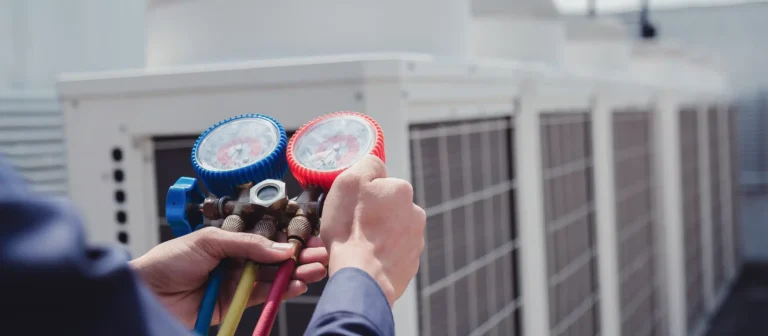
The right choice comes down to age, repair cost, efficiency, comfort, refrigerant type, usage patterns, and whether your current system has become the household villain. Let’s walk through it like a good air conditioning contractor would, with fewer scare tactics and more useful judgment.
The first question: what actually failed?
Before anyone starts talking about replacement, the system needs a real diagnosis. Not a “yep, it’s old” diagnosis. Not a dramatic sigh while staring at the outdoor unit. A real diagnostic process.
Air conditioning systems fail in different ways, and those failures do not all carry the same weight. A bad capacitor, worn contactor, clogged drain line, dirty condenser coil, failed thermostat, loose wire, or weak blower motor may be repairable at a reasonable cost. A failed compressor, leaking evaporator coil, major refrigerant leak, or repeatedly freezing system can change the conversation quickly.
A proper air conditioning repair service should check electrical components, refrigerant pressures, temperature split, airflow, coil condition, drain function, thermostat operation, and visible signs of oil around refrigerant joints. If the technician spends seven minutes at your house and immediately recommends a full system replacement, your skepticism deserves a chair and a beverage.
Sometimes the problem is not the air conditioner at all. I have seen “AC failures” caused by clogged filters, closed supply registers, crushed ductwork, weak breakers, bad thermostat wiring, and even attic insulation issues. Occasionally, an electrician needs to look at the circuit feeding the equipment. If lights dim when the condenser kicks on, breakers trip repeatedly, or wiring looks like it was installed by someone racing a thunderstorm, electrical evaluation matters.
A good diagnosis does not just name the broken part. It explains why it failed, whether the failure is isolated, and what else is likely to follow.
Age matters, but it is not a birth certificate for replacement
Most central air conditioning systems last somewhere around 12 to 17 years, depending on climate, maintenance, installation quality, usage, and plain old luck. In brutally hot regions where systems run for long seasons, life expectancy often leans toward the shorter side. In milder climates, a well-maintained system may push beyond 18 years without causing daily drama.
Age is a useful clue, not a verdict.
A 6-year-old system with a failed capacitor is usually a repair candidate. A 14-year-old system with a leaking evaporator coil and an obsolete refrigerant is a different animal. A 20-year-old unit that still cools but sounds like a shopping cart full of wrenches may technically be repairable, but the money may be better spent on equipment that does not make the patio feel like an engine room.
The mistake many homeowners make is treating age as either irrelevant or everything. It is neither. Age belongs in the same conversation as repair cost, operating cost, reliability, and comfort.
Here is the blunt version: if your system is under 10 years old, repair is often worth serious consideration unless the failure is major or the installation was a disaster. If it is over 12 years old, replacement starts becoming more reasonable when repair costs rise. If it is over 15 years old and asking for a major repair, the unit is no longer making a request. It is negotiating its retirement package.
The repair cost rule, with real-world judgment
You may hear rules like “replace if the repair costs more than half the price of a new system.” That is not a bad starting point, but it is a little too tidy for real life. Houses are not spreadsheets with gutters.
A $600 repair on a 5-year-old system is usually a different decision than a $600 repair on a 19-year-old unit. A $2,500 coil replacement on a system with warranty coverage may make sense if labor is manageable and everything else is healthy. That same repair on an old R-22 system? Now we are lighting money on fire and calling it comfort.
A more useful way to think about it is this: compare the repair cost with the remaining realistic life of the equipment. If a $900 repair buys you three to five more reliable years, that can be a perfectly sane decision. If a $1,800 repair might buy you one more summer and a suspicious rattling noise, replacement deserves a hard look.
One old trade formula says to multiply the age of the equipment by the repair cost. If the number exceeds the cost of replacement, replacement may be the smarter move. For example, a 15-year-old system needing a $700 repair gives you 10,500. If replacement is around $8,000 to $12,000, you are in the gray zone. Useful? Sometimes. Perfect? No. It does not account for warranties, local energy costs, refrigerant type, duct condition, or whether your system has already had three expensive repairs since the last Olympics.
Still, formulas can help homeowners slow down and avoid panic buying. Panic is a terrible estimator.
When repair makes good sense
Repair is not a consolation prize. Many AC problems are straightforward, affordable, and worth fixing. If the rest of the system is sound, replacing everything because of one failed component can be like buying a new car because the battery died.
Repair usually looks reasonable when the equipment is relatively young, the failure is isolated, parts are available, the system has been maintained, and comfort was good before the breakdown. If your home cooled evenly, energy bills were predictable, humidity stayed under control, and the system did not require frequent service calls, a repair may restore normal life without draining the replacement fund.
Small electrical failures are common. Capacitors wear out. Contactors pit and fail. Thermostats go bad. Condensate drains clog, especially in humid climates where algae treats the drain line like a vacation condo. These issues can be annoying but not necessarily catastrophic.
Air conditioning maintenance also changes the calculation. A system that has received a yearly air conditioning tune-up, regular filter changes, coil cleaning, and drain service has a better chance of being worth repairing. Maintenance records tell a story. If that story says, “This unit has been cared for,” repair gets more attractive. If the story says, “The filter was last changed during a different presidential administration,” replacement may not be far behind.
When replacement starts waving both arms
Replacement becomes the stronger choice when repair costs climb, failures repeat, refrigerant problems appear, comfort is poor, or the system is near the end of its expected lifespan.
The most obvious red flag is a major component failure. Compressors and coils are expensive. Labor can be substantial. Refrigerant can add a painful line item. If a system is older and the compressor fails, many contractors will recommend replacement because the compressor is the heart of the unit, and once the heart is done, the rest of the body is rarely looking youthful.
Refrigerant leaks are another big factor. A small leak in an accessible fitting may be repairable. A leaking evaporator coil in an older system can be a budget trap. Adding refrigerant without fixing the leak is not a repair. It is a temporary bribe, and the system will be back with another invoice.
Poor comfort also matters. If the system technically works but leaves bedrooms hot, short cycles constantly, struggles with humidity, or runs nonstop without satisfying the thermostat, replacement may solve problems repair cannot. Sometimes the unit is the wrong size. Sometimes ductwork is undersized or leaky. Sometimes the original installation was done with the finesse of a folding chair thrown into a garage.
A good heating contractor or air conditioning contractor should evaluate the whole comfort system, not just swap metal boxes. That includes airflow, duct design, return air, insulation, equipment sizing, and thermostat location. Replacing a unit without addressing a bad duct system is like putting designer shoes on a duck. Interesting, perhaps, but not effective.
The refrigerant issue nobody enjoys discussing
Older air conditioners may use R-22 refrigerant, commonly known by the brand name Freon. R-22 has been phased out for new production in the United States because of environmental regulations. Existing recovered or reclaimed R-22 may still be used for service, but it can be expensive and availability varies.
If your R-22 system has a major refrigerant leak, replacement usually becomes more appealing. Paying a premium to recharge an old leaky system is rarely a happy long-term plan. It is especially painful when the leak is in a coil that also costs a lot to replace.
Newer systems have used R-410A for many years, though refrigerant standards continue to evolve. Depending on timing, region, and equipment availability, newer refrigerants may be part of replacement discussions. The main homeowner takeaway is simple: refrigerant type affects repair cost, future serviceability, and long-term value.
Do not let refrigerant become a mystery charge. Ask what refrigerant your system uses, whether there is a confirmed leak, where the leak is, whether repair is practical, and what the expected cost is today versus later. A clear answer beats a shrug every time.
Efficiency: the quiet math in the background
Energy efficiency does not always justify replacement by itself, but it belongs in the decision. Older systems often have lower SEER ratings than modern equipment. The higher the efficiency of the new system, the more potential energy savings you may see, especially if your AC runs heavily for months at a time.
That said, efficiency savings are not magic beans. A new system does not automatically cut the bill in half. Savings depend on your old equipment, local electric rates, thermostat habits, duct leakage, insulation, home orientation, shade, humidity, and how often someone in the house “just bumps it down a little” until the thermostat reads like a meat locker.
If your existing system is very old, inefficient, and runs long hours, replacement can reduce operating costs noticeably. If your current unit is only 8 years old and reasonably efficient, replacing it strictly for efficiency may take many years to pay back.
Comfort improvements can be more meaningful than raw energy savings. Variable-speed systems and properly matched equipment can do a better job controlling humidity and temperature swings. A heat pump installation may also make sense if you want efficient heating and cooling in one system, especially in climates where heat pumps perform well for much of the heating season. In colder areas, a dual-fuel setup with a furnace can be worth discussing with a heating contractor.
The indoor unit and outdoor unit are a matched pair
Homeowners sometimes ask whether they can replace only the outdoor condenser and keep the indoor coil or air handler. Sometimes yes, but often it is not ideal.
Air conditioning systems are designed as matched combinations. The outdoor unit, indoor coil, blower, metering device, and refrigerant must work together. Mismatched equipment can reduce efficiency, harm performance, void warranties, and create service headaches. If the indoor coil is old, dirty, leaking, or incompatible with the new condenser, replacing only half the system may save money upfront and cost more later.
There are exceptions. If a newer air handler is compatible and in excellent shape, partial replacement might be reasonable. If the furnace is fairly new and the evaporator coil can be properly matched, a contractor may offer options. But if the indoor equipment is the same age as a failed outdoor unit, replacement of the full cooling system usually makes more sense.
This https://www.thumbtack.com/ca/orange/drain-cleaning/service-lion-plumbing-heating-air-electric/service/505776771639230474?msockid=09a3ceb6f9ef6fd9024fd973f8ab6ea0 is especially true when the air conditioner shares a blower with a furnace. A furnace repair service may be needed separately if the heating side has issues, but the blower affects cooling airflow too. A weak blower motor, dirty wheel, or poor return air can make a new AC perform badly from day one.
Installation quality can make or break the decision
A new air conditioner is not automatically better. A correctly installed average system often outperforms a premium system installed poorly. I have seen expensive equipment connected to ductwork that wheezed like a harmonica in a sock. The brand name on the cabinet did not save it.
Replacement should include proper sizing, and that means more than matching the old unit. The old system may have been oversized or undersized. A proper load calculation considers square footage, insulation, windows, orientation, air leakage, ceiling height, climate, and internal heat gains. Guesswork is common, but common is not the same as good.
Oversized systems cool quickly but may not run long enough to remove humidity. The house feels clammy, temperatures swing, and the equipment short cycles itself into an early grave. Undersized systems run constantly and still cannot keep up on design-temperature days. Neither is charming.
Installation details matter: refrigerant line sizing, brazing practices, evacuation with a vacuum pump, airflow setup, condensate drainage, electrical connections, thermostat configuration, duct sealing, and commissioning readings. If replacement is on the table, choose the contractor as carefully as the equipment. The person installing it determines much of what you are actually buying.
A simple decision framework
Use this as a practical checkpoint before you approve a large repair or replacement. It will not replace a proper diagnosis, but it will keep the conversation grounded.
| Situation | Repair usually makes sense | Replacement usually makes sense | |---|---|---| | System age | Under 10 years, otherwise healthy | Over 12 to 15 years with major failure | | Repair cost | Modest and isolated | High compared with system value | | Refrigerant | Current, available, no major leak | Obsolete or expensive, confirmed major leak | | Comfort | Home cooled well before failure | Hot rooms, humidity, short cycling, chronic issues | | History | First meaningful repair in years | Repeated service calls and rising bills |
A table cannot feel the humidity in your hallway or hear the compressor groan at startup, but it gives the decision some bones. If most of your answers land in the repair column, do not let anyone rush you into replacement. If most land in the replacement column, do not spend a fortune trying to keep a tired system alive out of sentiment. It is an appliance, not a family heirloom.
The money conversation nobody can avoid
Repair costs vary widely by region, part, accessibility, labor rates, warranty status, and system type. A simple capacitor replacement may be a few hundred dollars. A blower motor can cost more, especially if it is an ECM motor. Coil and compressor work can run into the thousands. Full replacement can range widely, from several thousand dollars to well over ten thousand depending on capacity, efficiency, duct modifications, equipment type, and local market.
The cheapest quote is not always the least expensive outcome. If one proposal is far lower than the others, ask what is excluded. Permits? New pad? Line set flush or replacement? Thermostat? Duct transitions? Electrical whip and disconnect? Condensate safety switch? Warranty registration? Startup testing? Old equipment removal?
The most expensive quote is not automatically the best either. You are not buying a yacht with a compressor. Ask for specifics.
Financing can make replacement easier, but monthly payments can also make a questionable upgrade look painless. If your current system can be repaired affordably and reliably, repair may protect your cash flow. If replacement is inevitable soon, financing a planned installation may be better than funding emergency repairs every summer like a subscription service from hell.
Rebates and tax incentives may apply to certain high-efficiency air conditioners or heat pumps, but programs change. Utility rebates, manufacturer promotions, and federal incentives depend on equipment ratings, installation dates, and eligibility rules. Verify current details before counting the savings.
The role of maintenance after either choice
Whether you repair or replace, maintenance is what keeps the next decision from arriving early with sweaty palms.
Air conditioning maintenance is not glamorous. Nobody throws a party because the condenser coil got cleaned. Still, routine service helps protect efficiency, reliability, and equipment life. A seasonal air conditioning tune-up usually includes checking refrigerant performance, cleaning coils if needed, testing capacitors, inspecting electrical connections, clearing the condensate drain, checking temperature split, verifying airflow, and looking for early signs of trouble.
Filters matter more than people want to admit. A clogged filter can reduce airflow, freeze coils, strain motors, and make the system act broken. Use the right filter type and change it based on actual conditions. Homes with pets, dust, remodeling, or continuous fan operation may need changes more often than the package suggests.
Outdoor units need breathing room. Shrubs, leaves, grass clippings, and dryer lint can choke the condenser. Give it clearance. Do not build a decorative fence inches from the coil unless you enjoy paying for avoidable service calls.
The same maintenance mindset applies across the house. Plumbing leak repair handled early prevents hidden damage. Drain cleaning before a full blockage can spare you the joy of standing in shower water like a disappointed swamp creature. Rooter service and hydrojetting have their place when main lines clog repeatedly. Water heater repair or water heater installation decisions follow a similar logic to AC: age, repair cost, safety, efficiency, and reliability. Mechanical systems reward attention and punish neglect with invoices.
When the AC problem is part of a bigger home systems issue
Homes do not divide themselves neatly into contractor categories. Cooling, heating, electrical, plumbing, gas, drainage, and indoor air comfort often overlap.
If you are replacing air conditioning equipment and your furnace is old, it may be worth discussing both systems at once. That does not mean you must replace everything, but shared labor and compatibility can affect cost. A furnace repair service can evaluate the heating side, while the air conditioning contractor evaluates cooling components that rely on the furnace blower.
If you are considering a heat pump installation, the conversation may involve electrical capacity, backup heat, ductwork, thermostat controls, and possibly the existing gas furnace. In homes with gas appliances, a gas installation service may be needed for safe modifications. If the electrical panel is crowded or undersized, an electrician may need to upgrade circuits or service components.
Moisture problems can also masquerade as cooling problems. A home with plumbing leaks, poor drainage, or crawlspace humidity may feel uncomfortable even when the AC runs. Water softener installation can help protect plumbing fixtures and water heaters in hard-water areas, but it will not fix humidity. Plumbing repiping may be necessary in homes with failing water lines, but again, different problem. The point is that comfort complaints sometimes require a broader look.
Even lighting can affect heat gain. A lighting contractor swapping old hot fixtures for efficient options will not replace your AC, but lower internal heat loads can help. Septic system service is obviously not tied to cooling performance, unless a service truck blocks your condenser on a hot day, which I have actually seen. Houses are ecosystems, occasionally absurd ones.
Questions to ask before approving repair
When a technician recommends a repair, ask for clarity. You do not need to become an HVAC engineer over your lunch break, but you deserve plain answers.
- What failed, and how did you confirm it?
- Is this an isolated failure or a symptom of a larger problem?
- What is the total repair cost, including refrigerant, labor, and taxes?
- How old is the system, and are parts readily available?
- If we repair it, what remaining issues should I expect in the next year or two?
Those questions separate solid technicians from sales fog. A good pro will answer without acting offended. If someone treats basic questions like a personal attack, imagine how warranty service will feel.
Questions to ask before approving replacement
Replacement is a larger commitment, so the questions should go beyond brand and monthly payment. The equipment sticker matters, but the design and installation matter more.
- Did you perform or recommend a load calculation?
- Are the indoor and outdoor components properly matched?
- Does the proposal include duct, drain, thermostat, electrical, and permit details?
- What efficiency rating and warranty are included?
- What startup tests will be performed after installation?
A proper replacement proposal should read like a plan, not a napkin with a model number and a price. If duct modifications are needed, they should be explained. If the electrical disconnect is outdated, say so. If the condensate drain needs a safety switch, include it. Surprises are for birthdays, not mechanical contracts.
The edge cases that make decisions tricky
Some systems live in the gray zone. Maybe the AC is 11 years old, the repair is $1,200, and the house has cooled fine until now. Repair might be reasonable if the unit is otherwise clean and the refrigerant circuit is solid. Replacement might be reasonable if energy bills are high and you plan to stay in the home for 15 years.
Homeownership timeline matters. If you plan to sell soon, a modest repair may be the practical choice, provided the system operates safely and reliably. But if the unit is clearly at the end of life, replacement may help avoid inspection drama. Buyers notice old HVAC systems. Inspectors notice them harder.
Rental properties have their own math. Landlords may favor repair to control immediate cost, but repeated outages anger tenants and create emergency calls. A planned replacement can be cheaper than weekend breakdowns, portable AC units, and apology discounts.
Historic homes can complicate replacement because ductwork may be limited, attic access may be miserable, and equipment placement may require creativity. In those cases, repair may buy time while a better long-term design is planned. Mini-splits, high-velocity systems, or heat pumps may enter the discussion, but each has trade-offs.
Home warranty situations can also muddy the water. A warranty company may cover a repair but not replacement, or may choose the cheapest fix. Read the fine print. If the covered repair leaves you with an old inefficient system limping along, you still need to decide whether accepting the repair serves your long-term interest.
Beware of emotional math
Hot houses create bad decisions. When indoor temperature hits 84 degrees and everyone is cranky, the first person with a clipboard can seem like a rescuer. Slow down where you can.
Emergency replacement is sometimes unavoidable, especially for elderly residents, infants, medical needs, or extreme heat. But if the system can be temporarily repaired safely, or if portable cooling can get you through a few days, taking time to compare options can save thousands.
Also beware of sunk-cost thinking. If you spent $900 last year and $700 this year, that does not mean you should spend another $1,600 now to “get your money’s worth.” Past repairs are gone. The question is what your next dollar buys.
The reverse mistake is replacement fever. Some homeowners become convinced that any repair is throwing money away. Not true. A well-targeted repair on a healthy system can be the smartest move. The goal is not to own the newest equipment on the block. The goal is reliable comfort at a sensible total cost.
So, repair or replace?
If your air conditioner is young, the repair is modest, parts are available, and the system cooled your home well before the failure, repair is likely the right call. Schedule the work, keep up with maintenance, and resist the urge to glare at the outdoor unit every time you walk past it.
If your system is old, inefficient, leaking refrigerant, failing major components, or unable to keep the house comfortable even when running, replacement deserves serious attention. Not because contractors enjoy saying “new system,” though some say it with suspicious enthusiasm, but because the economics and comfort picture may no longer support repair.
The best decision usually comes from three things: a trustworthy diagnosis, a realistic look at remaining system life, and a clear comparison between repair cost and replacement value. Add your plans for the home, your budget, and your tolerance for future breakdowns, and the answer often becomes less mysterious.
An air conditioner does not need to be replaced just because it has a bad day. But when every summer becomes a hostage negotiation, it may be time to let the old unit retire with whatever dignity a sun-faded metal box can muster.
Name: Service Lion Plumbing Heating Air Electric
Address: 521 W Briardale Ave, Orange, CA 92865, United States
Phone: (657) 567-7305
Website: https://callservicelion.com/
Email: [email protected]
Hours:
Monday: Open 24 hours
Tuesday: Open 24 hours
Wednesday: Open 24 hours
Thursday: Open 24 hours
Friday: Open 24 hours
Saturday: Open 24 hours
Sunday: Open 24 hours
Open-location code: R48R+WV Orange, California, USA
Map/listing URL:
https://www.google.com/maps/search/?api=1&query=Google&query_place_id=ChIJQU4LBWHV3IARtnABtyykSA4
Google Map:
Socials:
https://www.facebook.com/ServiceLionCA/
https://www.youtube.com/channel/UCR_L35QzsRTxYZtX8PxJvPw
Local Service Information
Service Lion Plumbing Heating Air Electric provides plumbing, drain, heating, air conditioning, and electrical services from its Orange, California location.The company serves homeowners and properties throughout Orange and communities across Orange County and surrounding areas.
Available services include plumbing repairs, water heater work, drain and sewer services, heating and cooling service, electrical repairs, panels, lighting, outlets, and related home-system work.
Service is available for residential properties as well as light commercial needs described within the company's local service-area information.
The company's website emphasizes locally operated service, coordinated home-system support, and practical scheduling for plumbing, HVAC, and electrical needs.
The matching public business listing shows the Orange location as open 24 hours a day, seven days a week.
For service information or scheduling, call (657) 567-7305 or visit https://callservicelion.com/.
The public map listing identifies the business at 521 W Briardale Ave, Orange, CA 92865 and can be used for location and direction information.
Popular Questions About Service Lion Plumbing Heating Air Electric
What services does Service Lion Plumbing Heating Air Electric provide?
The company provides plumbing, drain and sewer, heating, air conditioning, and electrical services. Its published services include plumbing repair, water heaters, drain clearing, sewer work, HVAC repair and installation, electrical repairs, panels, circuit breakers, lighting, outlets, and related services.
Where is Service Lion Plumbing Heating Air Electric located?
The matching business location is 521 W Briardale Ave, Orange, CA 92865, United States.
What areas does Service Lion Plumbing Heating Air Electric serve?
The company serves Orange County and surrounding communities. Its published service-area information includes Orange, Anaheim, Brea, Yorba Linda, Fullerton, Huntington Beach, Newport Beach, Costa Mesa, Irvine, Lake Forest, and additional nearby cities.
Is Service Lion Plumbing Heating Air Electric open 24 hours?
The matching public business listing shows the location as open 24 hours on Monday through Sunday.
Does Service Lion Plumbing Heating Air Electric work on drains and sewer lines?
Yes. Published services include drain clearing, rooter service, camera inspection, hydro jetting, sewer line repair and installation, water line work, slab leak detection, and trenchless sewer line repair.
Does Service Lion Plumbing Heating Air Electric provide heating and air conditioning service?
Yes. Its published HVAC services include air conditioning repair and installation, heating service, furnace work, heat pumps, air ducts, indoor air quality assessments, and thermostat installation.
Does Service Lion Plumbing Heating Air Electric provide electrical service?
Yes. Published electrical services include repairs and installations, electrical panels, circuit breakers, safety inspections, lighting, outlets and switches, surge protection, generators, and EV charging equipment installation.
How can I contact Service Lion Plumbing Heating Air Electric?
Call (657) 567-7305.
Email: [email protected]
Website: https://callservicelion.com/
Facebook: https://www.facebook.com/ServiceLionCA/
Landmarks Near Orange, California
Old Towne Orange Historic District
A central historic district and useful geographic reference point for the Orange community.
Plaza Park
A well-known public gathering point in the center of Old Towne Orange.
Orange Public Library & History Center
A civic landmark serving residents near central Orange.
Hart Park
A major public park and recreation area south of central Orange.
Eisenhower Park
A public park serving neighborhoods in northern Orange.
Santiago Oaks Regional Park
A regional recreation and open-space landmark on the eastern side of Orange.
Irvine Regional Park
A large regional park and recognizable reference point east of the city.
Orange Park Acres
A distinctive residential community and service-area reference point in eastern Orange.
El Modena
An established Orange neighborhood that provides a practical local coverage reference.
Glassell Street
One of the city's principal north-south streets and a useful route through central Orange.
Lincoln Avenue
A major east-west roadway serving northern Orange and nearby communities.
State Route 55
A primary regional freeway connecting Orange with other parts of Orange County.