Electrician Services for HVAC and Lighting Needs
There is a special kind of silence that happens when an air conditioner stops working on a humid afternoon. It is not peaceful silence. It is the silence of a thermostat blinking uselessly while everyone in the building becomes a weather expert, a philosopher, and a little bit cranky. A similar silence follows when half the lights in a shop go dark, except then people start pointing at the ceiling as if accusation alone might restore power.
That is where skilled electrical work earns its keep. Heating, ventilation, air conditioning, and lighting all depend on electricity in ways that are easy to ignore until something quits. An air conditioning contractor may be the person people call when the cooling fails, and a lighting contractor may be the one brought in when fixtures need upgrading, but behind both trades sits a practical truth: circuits, controls, wiring, panels, disconnects, motors, relays, and safety devices do not care how busy your day is. They work correctly, or they make themselves the main character.
Electrician services tied to HVAC and lighting are not decorative extras. They are the infrastructure that lets comfort systems run, lets technicians diagnose problems safely, and lets buildings function without flicker, nuisance trips, overheated wiring, or mysterious “it only happens on Tuesdays” failures. Plumbing, heating, air-conditioning, and electrical work often meet in the same mechanical rooms, basements, crawl spaces, rooftops, and service closets. The trades remain distinct, and for good reason, but the jobsite does not always draw neat little boxes around them.
Where electricity meets heating and cooling
HVAC equipment is not just metal boxes blowing hot or cold air. It is a collection of motors, compressors, control boards, sensors, switches, wiring, and power connections that have to behave together. The U.S. Department of Energy describes HVAC contractors as specialists whose core work includes installing and maintaining heating, ventilation, and air-conditioning equipment. That work can also involve associated electrical and plumbing tasks connected to heating and cooling systems. Anyone who has stood next to a condensing unit while checking voltage knows that “associated” can carry a lot of weight.
A central air conditioner needs correctly supplied power. A heat pump installation needs proper electrical capacity, control wiring, and safe connections. Furnaces often rely on electrical components even when the heat source itself is fuel-based. Blower motors, igniters, inducer motors, safety switches, and control boards all depend on electrical reliability. So when someone searches for an air conditioning repair service or a furnace repair service, the eventual repair may involve both HVAC skill and electrical judgment.
That overlap is not a loophole for guesswork. It is precisely why qualified tradespeople matter. A bad capacitor, a loose connection, an undersized circuit, a failed contactor, and an incorrectly wired thermostat can all create symptoms that look like “the AC is broken.” The trick is knowing whether the problem belongs to the equipment, the wiring feeding it, the control circuit, or some delightful combination of all three. Delightful, in this context, means “the kind of thing that eats two service calls if nobody slows down and tests properly.”
Air conditioning maintenance and an air conditioning tune-up are good examples. People often picture filter changes and coil cleaning, and those matter. But electrical checks are also part of a sensible service visit. Loose connections create heat. Weak components strain motors. Incorrect refrigerant charge can raise energy use and increase failure risk, and proper HVAC installation depends on correct sizing and refrigerant charging. The mechanical and electrical sides of the system shake hands constantly. When one hand is covered in grease and the other is holding a meter, the handshake still counts.
The humble circuit: small detail, large consequences
Electrical service for HVAC is not glamorous. Nobody invites neighbors over to admire a correctly labeled disconnect. There is no ribbon-cutting ceremony for properly routed control wiring. Still, these details keep equipment serviceable and safe.
A disconnect near outdoor air-conditioning equipment lets a technician shut off power while servicing the unit. A correctly sized breaker helps protect conductors. Proper grounding and bonding reduce hazards. Clean terminations help prevent nuisance failures. Good labeling saves time, especially in commercial spaces where the panel directory seems to have been written during a power outage by someone using a spoon.
The temptation, especially when schedules are packed, is to treat power as binary. Is it on? Good. Is it off? Bad. Real work is less cartoonish. Voltage drop, poor connections, overloaded circuits, damaged insulation, and mismatched equipment can all produce half-problems. A unit might run until the hottest part of the day, then trip. A blower might start sluggishly. Lights might dim when equipment starts. A breaker might hold for weeks, then complain loudly during peak use. Buildings have moods, but most of them can be traced back to physics, installation quality, maintenance, or age.
Electricians who understand HVAC environments bring more than wire strippers. They know that equipment vibrates. They know condensate can show up where optimism said it would not. They know rooftop units bake in heat and weather, while crawl-space equipment lives in a kingdom of dust, spiders, and questionable life choices. They plan for service access, clearances, moisture, strain relief, and future troubleshooting. That is not fussiness. That is the difference between a clean service call and a technician inventing new vocabulary at 7 p.m.
Lighting is more than making rooms less spooky
Lighting looks simple until it is not. A fixture turns on, the room brightens, everybody moves on with life. But lighting work can involve load calculations, controls, occupancy sensors, dimming compatibility, emergency lighting, exterior safety lighting, and fixture placement. A lighting contractor thinks not only about whether a room is bright, but whether it is usable, efficient, maintainable, and safe.
Good lighting supports everything else in a building. Try servicing an air handler in a dim mechanical room and you will develop strong opinions about fixture placement. Try reading labels on a panel with a flashlight wedged under your chin and you will become a poet of resentment. Lighting for mechanical areas, basements, utility rooms, garages, shops, kitchens, hallways, and exterior service points is not a luxury. It is part of making a building workable.
Lighting upgrades can also expose electrical issues that have been hiding politely for years. Older wiring, crowded boxes, poor splices, overloaded circuits, and incompatible dimmers may show up during a fixture replacement. The fixture was never the villain. It was merely the messenger, wearing brushed nickel.
A thoughtful electrician does not simply swap hardware and flee. They look at the circuit, the controls, the space, and the way people actually use the building. In a home, that might mean reducing glare in a kitchen while making sure task lighting lands where knives and fingers coexist. In a commercial space, it might mean bright, consistent lighting for customer areas and better service lighting near equipment. In either case, the goal is not just illumination. The goal is lighting that behaves.
HVAC repair often starts with an electrical question
When cooling fails, the first instinct is to blame the air conditioner. Fair enough. It is the big noisy thing outside, so it draws suspicion. But air conditioning repair often begins with basic electrical verification. Is the unit receiving power? Is the thermostat calling? Is the contactor pulling in? Are control voltages present? Are safety switches open? Is there evidence of overheating, corrosion, or damaged wiring?
The same logic applies to heating. A heating contractor or furnace repair service may deal with combustion, airflow, venting, and controls, but electrical diagnosis remains central to many service calls. Modern comfort equipment relies on sequences. One component proves something, another component energizes, another waits for a signal, and then the system either runs or sulks. If the sequence stops, the technician has to find where and why.
There is a practical reason experienced contractors do not skip these checks. Replacing parts without testing is expensive fortune-telling. It occasionally works, which is the dangerous part, because occasional success can make bad habits feel like wisdom. Proper diagnosis protects the customer and the contractor. It also keeps useful parts out of the trash.
A heat pump installation makes the relationship even clearer. Heat pumps serve both heating and cooling roles, so electrical design and controls matter throughout the year. Correct sizing, proper installation, and proper charging all affect energy use and reliability. The electrical supply must match the equipment requirements, and control wiring must be handled carefully. A heat pump is not a toaster with ambition. It is a coordinated system, and sloppy electrical work can turn coordination into interpretive dance.
When plumbing, HVAC, and electrical work share the same stage
Plumbing and HVAC trades often work near the same equipment, and sometimes directly on related systems. Plumbing, heating, and air-conditioning are recognized as special trade contractor work, while electrical work is classified separately. That distinction matters, but so does coordination. A Plumber might handle water heater repair, water heater installation, plumbing leak repair, drain cleaning, rooter service, hydrojetting, plumbing repiping, or water softener installation. An HVAC technician might handle air conditioning maintenance, air conditioning repair, furnace service, or heating equipment. An Electrician may be needed to power equipment, correct wiring, install lighting, or support controls.
The handoff can be smooth or ridiculous. I have seen mechanical rooms where every trade had clearly considered the next person. Valves were reachable. Electrical disconnects were visible. Lighting was adequate. Pipes were not blocking panel doors. It was beautiful in the way only a service professional can find beautiful, which is to say nobody else noticed, but everyone benefited.
I have also seen the opposite: equipment boxed in by later work, lights placed behind ductwork, panels treated like shelving, and service access reduced to a yoga challenge. That sort of installation may technically function at first, but it punishes every repair afterward. A building does not need to be https://find-open.com/orange-orange-ca/service-lion-plumbing-heating-air-electric-10945191 fancy to be serviceable. It needs planning, respect for clearances, and tradespeople who understand that the next technician is probably going to be tired, carrying tools, and not in the mood for architectural puzzles.
Septic system service and gas installation service add still more reasons to coordinate properly. Those specialties have their own safety concerns and trade requirements. Electrical work near pumps, controls, mechanical equipment, and service areas must be planned with the environment in mind. Water, gas, electricity, and confined spaces are not ingredients for improvisation. They are ingredients for licensed, qualified professionals and a healthy respect for doing things in the correct order.
What a good service visit feels like
A proper service visit has a rhythm. The technician listens first, because customers often describe patterns that matter. “It trips only when the dryer and AC are both running” is not small talk. “The lights flicker when the heat starts” is not a ghost story, usually. “It worked fine until the new water heater installation” may point toward a recent change in the mechanical room. Details like timing, weather, recent repairs, noises, smells, and repeated resets can save a lot of wandering.
Then comes observation. A good electrician or HVAC professional looks for the obvious without being fooled by it. Is equipment accessible? Are covers secure? Is wiring protected? Are there signs of water intrusion, heat damage, corrosion, loose fittings, or past repairs? Has someone installed a mystery junction box that appears to have been wired during a lunar eclipse? These visual clues do not replace testing, but they guide it.
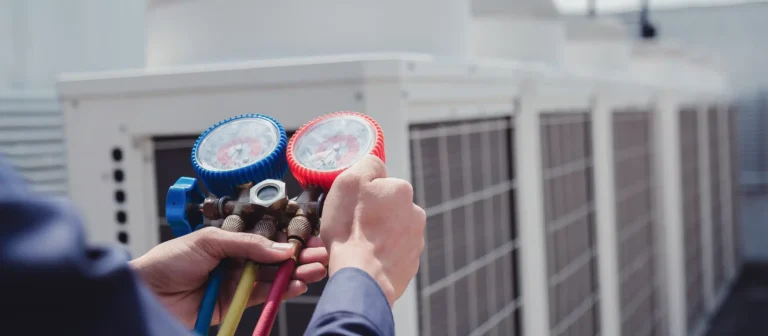
Testing comes next. Meters, gauges, and diagnostic tools tell the story more reliably than hunches. On HVAC equipment, electrical testing may be paired with airflow checks, refrigerant-related evaluation by properly certified technicians, or control sequence checks. On lighting circuits, testing may involve voltage, continuity, switch legs, dimmer compatibility, and load considerations. The customer does not need a lecture on every electron in the room, but they deserve a clear explanation of the fault and the repair options.
Good service also includes restraint. Not every old component needs immediate replacement. Not every flicker means catastrophe. Not every repair should become an upgrade. Professional judgment includes knowing when a fix is adequate, when a replacement is smarter, and when the system has reached the point where repairs are just tuition payments toward the installation that should have happened last year.
Common signs that HVAC or lighting needs electrical attention
Some symptoms deserve prompt attention because they suggest more than ordinary wear. They do not always mean disaster, but they do mean someone qualified should take a look before the building starts adding special effects.
- Breakers trip repeatedly when HVAC equipment starts or while lighting loads are in use.
- Lights dim, flicker, buzz, or behave differently when heating or cooling equipment cycles.
- Outdoor AC equipment hums but does not start, starts roughly, or shuts down unexpectedly.
- Switches, outlets, panels, disconnects, or equipment covers feel warm or show discoloration.
- A recent HVAC, water heater, lighting, or plumbing project changed how nearby circuits behave.
That list is short because the building will usually provide its own expanded edition if ignored. Repeated resets are especially tempting. People love resetting breakers because it feels like fixing something. Sometimes it is. More often, it is the electrical equivalent of hitting snooze on a smoke alarm. If a breaker trips once, there may be a momentary cause. If it trips repeatedly, it is reporting a condition. Listen to the tiny courtroom judge in the panel.
Installation quality: the boring miracle
Proper installation lacks drama, which is exactly the point. HVAC equipment that is correctly sized, properly charged, wired correctly, and installed with service access has a much better chance of living a quiet, productive life. ENERGY STAR guidance emphasizes that proper HVAC installation includes correct equipment sizing and refrigerant charging, and that proper charging of an air conditioner or heat pump can reduce energy consumption and lower the risk of failure. That is not glamorous, but neither is replacing an expensive component early because the original setup was careless.
Lighting installation carries its own version of this. A fixture should match the space, the circuit, and the controls. Dimmers should be compatible. Boxes should support the fixture. Splices should be secure. Exterior fixtures should suit exterior conditions. Service lighting should land where service actually happens, not where it looks symmetrical on a plan drawn by someone who has never changed a filter.
For HVAC, the electrician and air conditioning contractor may need to coordinate on equipment requirements, disconnect placement, control wiring routes, and panel capacity. For heating, the heating contractor and electrician may need to coordinate around furnace controls, blower power, or related equipment. For plumbing-adjacent equipment, coordination might involve water heater installation, pumps, or treatment systems. The job goes best when each trade respects the others and nobody treats the mechanical room like a storage closet with wires.
Maintenance is cheaper when systems are not neglected into comedy
Air conditioning maintenance is not just about preventing breakdowns on the hottest day, though that is a worthy goal. It is also about catching small electrical and mechanical issues before they become expensive ones. Loose terminals, worn contactors, weak capacitors, dirty coils, restricted airflow, and incorrect operating conditions can combine into larger failures. A tune-up cannot make neglected equipment immortal, but it can reduce surprises.
Lighting maintenance matters too, especially in commercial and service areas. Failed lamps or fixtures in a lobby are annoying. Failed lighting in a stairwell, parking area, utility room, or mechanical space can create safety and service problems. When lighting is tied to occupancy controls, emergency circuits, or exterior security needs, it deserves more attention than the old “replace it when someone complains” strategy.
There is also a morale factor nobody puts on invoices. Buildings that are comfortable and well lit feel managed. Buildings with flickering lights, uneven temperatures, and equipment that sounds like a toolbox falling down stairs feel neglected. Customers notice. Employees notice. Homeowners definitely notice, usually while standing under a vent and asking why one room feels like July and another feels like a refrigerator with windows.
Repair or replace: the question nobody enjoys but everyone asks
The repair-versus-replace conversation can get awkward because it mixes money, inconvenience, risk, and hope. A simple electrical repair may restore HVAC equipment or lighting at modest cost. A failed control component or poor connection may be straightforward. But older systems with recurring failures, poor installation history, or mismatched components can become expensive to keep alive.
For air conditioning repair, the decision depends on the nature of the failure, the system’s age and condition, installation quality, and whether other problems are waiting in line. For lighting, replacement may make sense when fixtures are obsolete, controls are incompatible, or maintenance costs keep piling up. For water heater repair versus water heater installation, the same practical logic applies: fix what is worth fixing, replace what has turned repair into a subscription service.
No honest contractor can diagnose over a paragraph, and anyone who pretends otherwise may also have a bridge to sell. The right answer comes from inspection, testing, and context. A good professional explains what failed, what it takes to repair it, what risks remain, and when replacement becomes the more rational choice. The best ones do it without theatrics. Fear is a poor sales tool and a worse maintenance plan.
Why licensing and specialization matter
HVAC, plumbing, and electrical work overlap in the building, but they are not interchangeable hobbies. OSHA recognizes plumbing, heating, and air-conditioning as special trade contractor work, with electrical work classified separately. Air-conditioning service and repair is also recognized as its own service category. The Environmental Protection Agency defines appliances under Section 608 to include air conditioners and other refrigeration equipment, and technicians involved in maintenance, service, or repair can include installers and contractor employees. Refrigerant work has its own requirements, and electrical work has its own hazards and rules.
That means the right contractor mix matters. An air conditioning contractor should understand the HVAC equipment. An Electrician should understand the electrical system feeding and controlling it. A Plumber should understand plumbing systems, leak repair, drain cleaning, water heaters, repiping, and related work. A gas installation service should be handled by qualified people who understand gas systems. When these roles cooperate, the customer gets a building that works instead of a blame relay.
The worst jobs often start with a sentence like, “My cousin said it was probably simple.” Sometimes it is simple. Simple does not mean safe, legal, or correctly diagnosed. Electricity and mechanical systems have a way of punishing confidence unaccompanied by competence. Witty as that sounds, the bills are not funny.
A practical way to choose the right service provider
Hiring for HVAC-related electrical work or lighting service should not feel like auditioning magicians. You want clear communication, relevant experience, and a contractor who can explain where their scope begins and ends. A company that handles plumbing and HVAC may coordinate many Plumber needs under one roof, but electrical work still requires proper qualification. A lighting contractor may be ideal for fixture and control upgrades, while an electrician with HVAC experience may be the better fit for power issues affecting comfort equipment.
Here is a brief sanity check before scheduling service:
- Describe the symptom clearly, including when it happens and what else is running.
- Ask whether the company handles the specific equipment or system involved.
- Confirm that electrical, HVAC, plumbing, gas, or refrigerant work will be performed by qualified technicians for that scope.
- Mention recent work, such as heat pump installation, water softener installation, plumbing repiping, or lighting changes.
- Request a clear explanation of findings before approving major repairs.
That short conversation can prevent a mismatched appointment. It also helps the technician arrive with the right expectations, and sometimes the right parts. No one wins when the person dispatched for a lighting issue discovers the real problem is an HVAC circuit buried in a mechanical room, except perhaps the coffee shop visited between trips.
The quiet value of coordination
The best service businesses do not treat trades like rival kingdoms. They coordinate. If drain cleaning or rooter service is happening near electrical equipment, someone thinks about protection and access. If hydrojetting is planned in a service area, water and electrical safety deserve attention. If a heating contractor is replacing equipment, the electrical requirements should be reviewed before installation day, not discovered at 4:30 p.m. With a crew standing around and the customer asking if the heat will be back tonight.
Coordination prevents rework. It also prevents ugly installations. A little planning can keep pipes from blocking panels, ducts from swallowing light, and wiring from being routed where future service will require archaeology. Buildings change over time. Equipment gets replaced. Plumbing leak repair opens walls. Lighting upgrades expose old decisions. HVAC replacements reveal whether the original installation was thoughtful or merely enthusiastic.
Professional insight often looks like asking one more question early. Where will the disconnect go? Can the panel support this? Will service access remain clear? Is the lighting adequate for future maintenance? Does this control wiring route make sense? Has the plumbing work introduced moisture concerns? None of those questions are dramatic. All of them can save time, money, and embarrassment.
Comfort and visibility are not luxuries
Electrician services for HVAC and lighting needs sit at the intersection of comfort, safety, efficiency, and daily sanity. Air conditioning repair, air conditioning maintenance, furnace service, heat pump installation, lighting upgrades, and electrical troubleshooting all share a simple goal: make the building work reliably for the people inside it.
A comfortable room with poor lighting still feels wrong. A bright room with failed cooling becomes a greenhouse with better visibility. A perfectly good HVAC system served by weak electrical work is a future service call wearing a disguise. A beautiful lighting plan on overloaded or poorly managed circuits is decoration balanced on a bad idea.
The trades may have separate classifications, licenses, tools, and specialties, but the building experiences them as one ecosystem. Power feeds equipment. Controls tell it what to do. Lighting lets people use and maintain the space. Plumbing and mechanical systems shape the environment around the electrical work. When all of that is designed, installed, and serviced with care, nobody talks about it much. They simply live, work, shop, cook, sleep, and complain about other things.
That is the secret reward of good electrical service in HVAC and lighting. When it is done well, it becomes boring. The air conditioner starts. The heat comes on. The lights behave. The breaker panel does not demand attention. The mechanical room does not resemble a dare. The customer forgets the system exists, which is exactly what most buildings are hoping for.
And if a building could speak, it would probably ask for three things: proper power, decent lighting, and no more mystery wiring behind the water heater. Reasonable requests, really.
Name: Service Lion Plumbing Heating Air Electric
Address: 521 W Briardale Ave, Orange, CA 92865, United States
Phone: (657) 567-7305
Website: https://callservicelion.com/
Email: [email protected]
Hours:
Monday: Open 24 hours
Tuesday: Open 24 hours
Wednesday: Open 24 hours
Thursday: Open 24 hours
Friday: Open 24 hours
Saturday: Open 24 hours
Sunday: Open 24 hours
Open-location code: R48R+WV Orange, California, USA
Map/listing URL:
https://www.google.com/maps/search/?api=1&query=Google&query_place_id=ChIJQU4LBWHV3IARtnABtyykSA4
Google Map:
Socials:
https://www.facebook.com/ServiceLionCA/
https://www.youtube.com/channel/UCR_L35QzsRTxYZtX8PxJvPw
Local Service Information
Service Lion Plumbing Heating Air Electric provides plumbing, drain, heating, air conditioning, and electrical services from its Orange, California location.The company serves homeowners and properties throughout Orange and communities across Orange County and surrounding areas.
Available services include plumbing repairs, water heater work, drain and sewer services, heating and cooling service, electrical repairs, panels, lighting, outlets, and related home-system work.
Service is available for residential properties as well as light commercial needs described within the company's local service-area information.
The company's website emphasizes locally operated service, coordinated home-system support, and practical scheduling for plumbing, HVAC, and electrical needs.
The matching public business listing shows the Orange location as open 24 hours a day, seven days a week.
For service information or scheduling, call (657) 567-7305 or visit https://callservicelion.com/.
The public map listing identifies the business at 521 W Briardale Ave, Orange, CA 92865 and can be used for location and direction information.
Popular Questions About Service Lion Plumbing Heating Air Electric
What services does Service Lion Plumbing Heating Air Electric provide?
The company provides plumbing, drain and sewer, heating, air conditioning, and electrical services. Its published services include plumbing repair, water heaters, drain clearing, sewer work, HVAC repair and installation, electrical repairs, panels, circuit breakers, lighting, outlets, and related services.
Where is Service Lion Plumbing Heating Air Electric located?
The matching business location is 521 W Briardale Ave, Orange, CA 92865, United States.
What areas does Service Lion Plumbing Heating Air Electric serve?
The company serves Orange County and surrounding communities. Its published service-area information includes Orange, Anaheim, Brea, Yorba Linda, Fullerton, Huntington Beach, Newport Beach, Costa Mesa, Irvine, Lake Forest, and additional nearby cities.
Is Service Lion Plumbing Heating Air Electric open 24 hours?
The matching public business listing shows the location as open 24 hours on Monday through Sunday.
Does Service Lion Plumbing Heating Air Electric work on drains and sewer lines?
Yes. Published services include drain clearing, rooter service, camera inspection, hydro jetting, sewer line repair and installation, water line work, slab leak detection, and trenchless sewer line repair.
Does Service Lion Plumbing Heating Air Electric provide heating and air conditioning service?
Yes. Its published HVAC services include air conditioning repair and installation, heating service, furnace work, heat pumps, air ducts, indoor air quality assessments, and thermostat installation.
Does Service Lion Plumbing Heating Air Electric provide electrical service?
Yes. Published electrical services include repairs and installations, electrical panels, circuit breakers, safety inspections, lighting, outlets and switches, surge protection, generators, and EV charging equipment installation.
How can I contact Service Lion Plumbing Heating Air Electric?
Call (657) 567-7305.
Email: [email protected]
Website: https://callservicelion.com/
Facebook: https://www.facebook.com/ServiceLionCA/
Landmarks Near Orange, California
Old Towne Orange Historic District
A central historic district and useful geographic reference point for the Orange community.
Plaza Park
A well-known public gathering point in the center of Old Towne Orange.
Orange Public Library & History Center
A civic landmark serving residents near central Orange.
Hart Park
A major public park and recreation area south of central Orange.
Eisenhower Park
A public park serving neighborhoods in northern Orange.
Santiago Oaks Regional Park
A regional recreation and open-space landmark on the eastern side of Orange.
Irvine Regional Park
A large regional park and recognizable reference point east of the city.
Orange Park Acres
A distinctive residential community and service-area reference point in eastern Orange.
El Modena
An established Orange neighborhood that provides a practical local coverage reference.
Glassell Street
One of the city's principal north-south streets and a useful route through central Orange.
Lincoln Avenue
A major east-west roadway serving northern Orange and nearby communities.
State Route 55
A primary regional freeway connecting Orange with other parts of Orange County.