Furnace Repair Service for Heating System Issues
A furnace has a talent for choosing dramatic moments. It rarely quits on a mild Tuesday afternoon when everyone is wearing sensible socks. No, it waits for the first hard cold snap, preferably after dinner, when the house has gone quiet and the thermostat is making promises it cannot keep.
That is when furnace repair service stops sounding like a vague home maintenance phrase and starts sounding like the name of the cavalry.
Heating system issues can be simple, stubborn, or sneaky. Sometimes the fix is part adjustment, part cleaning, part diagnostic patience. Sometimes the furnace is only one character in a larger cast that includes ductwork, thermostat wiring, gas piping, electrical controls, plumbing connections, ventilation, and even cooling equipment if the home uses a heat pump or shared air handler. Heating and cooling work is not one lonely trade in a dusty corner. It sits in the busy intersection of HVAC, plumbing, gas installation service, and electrical work, which is why a good heating contractor has to think like a detective with a tool bag.
When the furnace is not just “acting up”
Homeowners use charming phrases for furnace trouble. “It’s being weird.” “It sounds angry.” “The heat sort of works.” “There’s a smell, but not a scary smell, maybe a toast smell?” These descriptions may not be technical, but they are useful because they tell the technician where to begin.
A furnace repair service call often starts with the obvious complaint: no heat, weak heat, short cycling, strange noises, delayed ignition, a blower that never stops, or a system that starts confidently and then gives up like a teenager asked to unload the dishwasher. Behind those symptoms, the cause may involve airflow, controls, fuel delivery, venting, electrical components, or the general condition of the heating equipment.
The tricky part is that furnaces do not operate in isolation. They are part of a larger mechanical system. An HVAC contractor installs and maintains heating, ventilation, and air conditioning equipment, and that work may include installation, maintenance, repairs, duct cleaning, and the plumbing or electrical work connected to heating and cooling equipment. That is not trivia. It matters because the source of a heating issue may not sit inside the furnace cabinet at all.
A thermostat problem can masquerade as a furnace failure. Restricted ductwork can make a perfectly capable furnace look weak. Electrical issues can interrupt a heating cycle. Gas supply concerns require a different level of care than a dirty filter. A technician who only stares at the burner compartment may miss the real culprit waving from the next room.
The first question: is it a repair, a maintenance problem, or an installation problem?
Not every heating issue belongs in the same bucket. Some problems are true breakdowns. A component fails, the system stops, and nobody needs a philosophical debate. Other problems grow from skipped maintenance. Still others come from installation choices made months or years earlier, such as sizing, airflow, equipment setup, or the way the furnace interacts with the rest of the HVAC system.
This distinction matters because repair alone may not solve a design or maintenance problem. If a furnace overheats because airflow is restricted, replacing a stressed part without addressing airflow is like buying a new umbrella for a roof leak. Bold, but not exactly strategic.
A competent furnace repair service looks beyond the broken piece. It checks whether the system can move enough air, whether controls are responding correctly, whether fuel and ignition are working safely, whether venting makes sense, and whether connected equipment is affecting operation. If the home also has central air conditioning, the furnace may share a blower and duct system with the cooling side. That is where air conditioning maintenance and heating maintenance begin to overlap. The furnace and air conditioner may have different seasons, but they are often roommates.
The same applies to heat pump installation. A heat pump can provide heating and cooling, and its performance depends on correct sizing, installation quality, and system setup. Proper HVAC installation includes correct equipment sizing, and for air conditioners and heat pumps, proper refrigerant charging can reduce energy consumption and lower the risk of failure. That point may sound like it belongs to cooling season, but in homes using heat pumps for heating, it matters when the weather turns cold too.
The cast of trades behind a warm house
People often ask whether they need a heating contractor, an air conditioning contractor, a plumber, an electrician, or someone else entirely. The honest answer is: it depends on what the problem touches.
Heating, ventilation, and air conditioning contractors specialize in installing and maintaining HVAC equipment. Plumbing, heating, and air conditioning work is commonly grouped as special trade contractor work, while electrical work is treated separately. Still, real buildings do not care about neat categories. A furnace may involve gas piping, electrical controls, condensate drainage, ventilation, ductwork, and thermostat wiring. A service company may have technicians or coordinated trade professionals who address those connected areas.
A plumber may be involved when the issue relates to plumbing repair, water systems, sump pumps, sewer hookups, or connected mechanical piping. Plumbing leak repair, drain cleaning, rooter service, hydrojetting, water heater repair, water heater installation, plumbing repiping, and water softener installation live closer to the plumbing side of the house, but they often share the same service environment as heating work. Anyone who has walked into a mechanical room knows the equipment tends to gather together like it is attending a convention.
An electrician may be needed when the problem is electrical supply, circuits, controls, or wiring beyond standard HVAC service scope. A lighting contractor is a different specialty, but the point is similar: electrical work requires proper skill and classification. A gas installation service becomes relevant when fuel piping or gas-connected equipment needs attention. A septic system service is separate again, but in the broad home service universe, it is another example of specialized work that should not be guessed at by someone armed only with confidence and a video tutorial.
The best contractors know where their lane is and when another licensed trade should step in. That humility is not weakness. It is how houses avoid becoming cautionary tales.
What a furnace repair visit should feel like
A good service visit has a rhythm. The technician listens first, because the homeowner has usually collected clues without realizing it. Did the issue begin after a thermostat change? Does the furnace run longer than it used to? Is one room cold while another feels like a baked potato? Did the problem appear right after air conditioning repair, duct work, or other service? Has the filter been changed recently, or is it now less a filter and more an archaeological layer?
Then comes inspection and testing. The technician checks the system rather than guessing from the doorway. Heating equipment has sequences. It calls for heat, begins ignition or heat production, moves air, monitors safety limits, and shuts down when the thermostat is satisfied. When that sequence breaks, the failure point provides valuable evidence.
Here is a concise homeowner checklist that can make the service call faster without turning you into an unpaid apprentice:
- Note when the problem happens, such as startup, mid-cycle, or shutdown.
- Check whether the thermostat display is working and set to heat.
- Replace or inspect the air filter if it is accessible and safe to do so.
- Listen for unusual sounds, but do not remove panels or bypass safety switches.
- Tell the technician about recent work on HVAC, plumbing, gas, or electrical systems.
That is one of the few lists worth having because it prevents the classic service-call mystery novel, “The Case of the Noise Nobody Can Recreate.”
The usual suspects, without the guesswork circus
Furnace problems often fall into patterns. Airflow problems are common because heating systems rely on moving air across heat-producing components and through the home. A clogged filter, blocked return, duct restriction, or blower issue can reduce comfort and stress the equipment. The furnace may shut down to protect itself, or it may run longer while delivering less heat. Either way, the house gets chilly and everyone starts wearing coats indoors, which is a poor long-term design choice.
Control problems are another category. Thermostats, control boards, relays, and wiring connections help tell the furnace when to start and stop. If controls miscommunicate, the furnace may fail to start, cycle oddly, or behave intermittently. Intermittent problems are especially delightful, by which I mean they make everyone question their sanity. A system that fails at 7 a.m. And performs perfectly at 2 p.m. Is not “fixed by vibes.” It needs methodical diagnosis.
Fuel and ignition concerns require particular care. Gas-fired equipment must be treated with respect, not bravado. If there is a suspected gas issue, unusual odor, or unsafe condition, the right response is not continued tinkering. It is proper professional service and immediate safety action as appropriate. Gas installation service and furnace repair work belong in trained hands because mistakes are not merely inconvenient.
Venting and combustion air are also important. A heating contractor does not only ask whether the furnace makes heat. The question is whether it operates safely and correctly in the space where it is installed. Mechanical rooms, utility closets, basements, and attic installations all present different access and ventilation realities. The furnace may have been installed properly for its original conditions, then later changes in the home may affect performance. Homes have a way of evolving. Someone finishes a basement, replaces doors, adds insulation, changes equipment, or stores twelve boxes of holiday decorations around the furnace like a festive barricade.
Then there are age and condition. A repair may be sensible if the equipment is generally sound and the failure is isolated. Replacement becomes more reasonable when breakdowns stack up, comfort remains poor, or installation issues cannot be corrected economically. No honest contractor should declare every old furnace doomed on sight. Also, no honest contractor should keep putting expensive parts into a system that is clearly auditioning for retirement.
Why heating and air conditioning belong in the same conversation
It may feel strange to discuss air conditioning repair during a furnace article, but many https://wheretoapp.com/search?poi=1029253026809999542 homes use shared components for heating and cooling. The blower, ductwork, thermostat, and air distribution system may serve both sides. If the cooling system has airflow problems in July, the heating system may complain about the same problem in January, just wearing a different hat.
An air conditioning contractor or air conditioning repair service works on cooling equipment, but the broader HVAC view is often what protects the whole system. Air conditioning maintenance and an air conditioning tune-up can reveal issues with airflow, controls, cleanliness, and installation quality that also affect heating performance. Air conditioning repair is not furnace repair, but both live under the same HVAC roof.
For systems that include heat pumps, the connection becomes even tighter. Heat pump installation must be treated as a heating and cooling decision, not just a box swap. Correct sizing matters. Correct refrigerant charging matters. Setup matters. A heat pump that is not installed or charged properly can use more energy and face higher failure risk. That is not a sales slogan. It is the practical result of equipment operating outside the conditions it was designed for.
The same thinking applies to conventional central air systems. Proper installation quality has long consequences. A homeowner may not see the difference on day one, especially if the system turns on and cold or warm air comes out. But poor setup often shows itself later through comfort complaints, repair frequency, efficiency problems, and shortened equipment life. Mechanical systems remember shortcuts. They are petty that way.
Repair versus replacement, the uncomfortable dinner conversation
Nobody enjoys hearing that a furnace may need replacement. It lands somewhere between “your car needs a transmission” and “the dog ate something expensive.” Still, repair and replacement should be compared honestly.
A repair makes sense when the problem is specific, the equipment is otherwise serviceable, and the cost is reasonable relative to expected performance. Maintenance-related failures often respond well to cleaning, adjustment, and part replacement if the system has not been abused for too long. A furnace that has been neglected may still be repairable, but the technician should explain the risk of additional failures.
Replacement becomes more compelling when the furnace has recurring breakdowns, unsafe operation, major component failure, poor comfort that repairs cannot solve, or installation problems that make continued service impractical. The decision should also account for connected systems. If the air conditioner shares the blower or cabinet, replacing one piece may affect the other. If a heat pump is being considered, the ductwork, electrical capacity, controls, and sizing all deserve attention.
There is no universal magic number that makes the decision for every home. Beware of anyone who pretends there is. A good heating contractor explains options in plain English, including what must be done now, what can wait, and what would be wasteful. The homeowner should come away understanding the trade-offs, not feeling like they were trapped in a mechanical room and sold a spaceship.
The maintenance nobody brags about, but everyone benefits from
Furnace maintenance is not glamorous. Nobody posts a proud photo of a clean blower compartment next to a vacation sunset. Yet maintenance often separates boring winters from expensive ones.
Regular service gives a technician a chance to inspect the heating system before peak demand, clean accessible components, check operation, look for wear, verify proper cycling, and catch small issues before they become dramatic. The same logic applies to air conditioning maintenance before cooling season. HVAC equipment works hardest during weather extremes, which is exactly when service schedules fill up and patience levels drop.
Maintenance also helps preserve the value of prior repairs and installations. If a contractor performs water heater installation, furnace repair service, heat pump installation, or air conditioning repair, the equipment still needs periodic attention. Mechanical systems are not crockpots. You cannot simply set them and forget them for a decade.
The best maintenance visits also create a service history. That history helps diagnose future problems. If airflow readings, cycling behavior, electrical observations, and component condition are tracked over time, the technician is not starting from zero each visit. Patterns emerge. A blower that slowly loses performance, a control issue that appears intermittently, or a duct restriction that worsens after remodeling can be easier to identify when someone has been paying attention.
When water, drains, and heating equipment meet
Plumbing and HVAC often share real estate. A furnace may sit near a water heater, softener, sump pump, or drain line. Some heating and cooling systems produce condensate that must be drained properly. Mechanical rooms commonly hold multiple systems, and a problem in one area can complicate another.
A plumbing leak repair near heating equipment should not be ignored. Water and electrical components are not known for their healthy long-term relationship. Drain cleaning may matter if condensate or nearby floor drains are slow. Rooter service and hydrojetting belong to more serious drain and sewer cleaning situations, but they illustrate the broader point: the home’s mechanical systems are connected by location, drainage, power, fuel, and airflow.
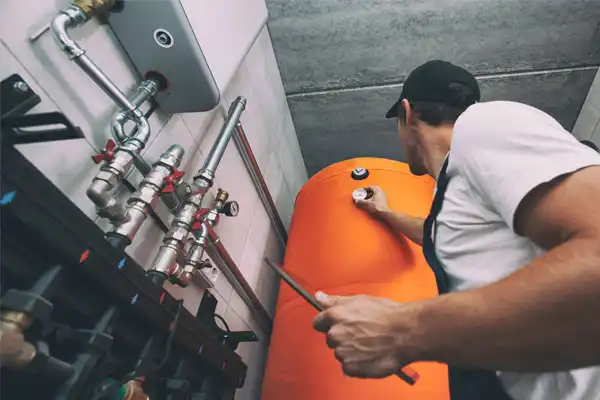
Water heater repair and furnace repair may happen in the same visit for a multi-trade service business, but the technician still needs the right expertise for each appliance. Water heater installation involves different considerations than furnace replacement. Plumbing repiping or water softener installation sits on yet another branch of the trade tree. A company that offers plumbing and HVAC services should not blur those skills into one vague promise. It should send people who know the equipment in front of them.
The electrical side: small wires, large consequences
Furnaces depend on electricity for controls, blowers, ignition systems, safety devices, and thermostats. Even gas furnaces are not electricity-free. When the power side misbehaves, the symptoms can look mechanical at first. The blower may fail, the system may not receive a call for heat, or the furnace may shut down unexpectedly.
Some electrical issues fall within standard HVAC diagnostic work. Others call for an electrician. The boundary depends on the nature of the problem, local requirements, and the work being performed. Electrical work is separately classified from plumbing, heating, and air conditioning work for a reason. Safe service means respecting that boundary.
A good furnace technician will not pretend every electrical concern can be solved with a quick wire wiggle and a confident grin. If the issue involves dedicated circuits, panel concerns, unsafe wiring, or broader electrical system problems, an electrician is the right professional. The same principle applies if a lighting contractor is needed for lighting-specific work. Specialization exists because buildings are complicated and electricity has a famously poor sense of humor.
Commercial, institutional, and residential work are cousins, not twins
HVACR contractors design, install, maintain, and service systems in residential, commercial, industrial, institutional, and governmental settings. That range matters because a furnace repair service call in a home is not identical to servicing heating equipment in a commercial building. The principles overlap, but the scale, access, controls, and consequences can differ substantially.
Residential customers usually notice comfort first. A bedroom is cold, the living room is stuffy, or the furnace keeps waking everyone at night with a sound like a toolbox falling down stairs. Commercial and institutional settings may add occupancy schedules, ventilation requirements, larger equipment, and more complex control systems. Industrial settings can bring specialized demands. Governmental facilities often involve process, documentation, and coordination.
The best contractors understand the setting. They do not bring a one-size-fits-all mindset to every building. A repair that makes sense in a small home may not be the right approach in a larger facility. Maintenance planning also changes with use. Equipment serving a busy building may need a different service rhythm than equipment in a lightly used space.
Questions worth asking before hiring a furnace repair service
A homeowner does not need to become a heating expert before booking service. That would be unreasonable, and frankly, there are better hobbies. But a few practical questions can reveal whether a contractor thinks broadly enough about the system.
- Do you service both heating and air conditioning equipment when shared components are involved?
- Can you address connected plumbing, gas, or electrical issues, or coordinate the proper trade when needed?
- Do you check airflow, controls, venting, and system operation rather than only replacing parts?
- Can you explain when repair is sensible and when replacement should be considered?
- Do you offer maintenance for the full HVAC system, including air conditioning tune-up and heating service?
These questions are not a trap. A reputable contractor should welcome them. Clear answers usually signal clear processes. Vague answers usually signal a future invoice with too many surprises.
Why “just get it running” can cost more later
There are moments when temporary heat matters. If the house is cold, a short-term repair may be the practical choice. Still, “just get it running” can become expensive if the underlying issue remains. A furnace that trips a safety limit because of airflow restriction might run again after a reset, but the reason it tripped still matters. A system with intermittent control failure might behave for one cycle and fail again during the next cold night. A gas or venting concern should never be brushed aside for convenience.
The smarter approach separates urgent service from complete correction. First, make the situation safe. Second, restore heat if it can be done properly. Third, identify any remaining work needed to prevent recurrence. Sometimes those steps happen in one visit. Sometimes parts, coordination, or larger repairs require follow-up. The homeowner should know which is which.
That transparency is where good furnace repair service earns trust. Heating equipment is too important for theatrical mystery. If the repair is straightforward, say so. If the system has multiple issues, explain them in order of urgency. If replacement is being discussed, explain why. If a plumber, electrician, air conditioning contractor, or gas installation service professional is needed, say that too.
The quiet value of correct installation
Many repair problems begin as installation problems wearing a fake mustache. Improper equipment sizing can cause comfort and operation issues. Poor airflow setup can strain components. Incorrect refrigerant charging on an air conditioner or heat pump can increase energy use and failure risk. Weak coordination between trades can leave homeowners with systems that technically run but never quite behave.
Quality installation is not merely about making equipment fit in the available space. It includes sizing, setup, charging where refrigerant systems are involved, control integration, airflow, drainage, and safe connections. It also includes knowing the limits of each trade. HVAC contractors may perform the heating and cooling work, while plumbing or electrical tasks may require appropriate expertise. The finished system should operate as a whole, not as a collection of appliances reluctantly sharing a basement.
This is especially important when replacing old equipment. A new furnace attached to old duct problems may disappoint. A new heat pump installed without careful sizing and charging may underperform. A new air conditioner connected to neglected airflow may struggle. Installation quality is not flashy, but it is one of the best predictors of whether the homeowner spends the next several years comfortable or annoyed.
When the house gives mixed signals
Some heating complaints are not caused by a single failed component. A home can have uneven temperatures because of duct layout, air leakage, insulation differences, thermostat location, or equipment operation. A furnace may be doing what it can while the distribution system undermines it. That is why experienced contractors ask questions that seem nosy at first.
Which rooms are cold? Did the problem change after remodeling? Are doors kept closed? Does the issue happen during wind, extreme cold, or only at night? Does the air conditioning have similar room-to-room problems in summer? These details point toward system behavior rather than isolated furnace failure.
A heating contractor who understands both furnace repair and air distribution can avoid unnecessary part replacement. Sometimes the furnace is innocent. Not always, of course. Furnaces are capable of guilt. But the diagnosis should prove it.
The service business that treats the whole mechanical room seriously
A contractor centered on plumbing and HVAC work occupies a practical niche. Homes and buildings need heat, cooling, ventilation, drainage, hot water, safe gas connections, and reliable power for mechanical equipment. The work is specialized, but the systems touch each other constantly.
That is why a service business may offer furnace repair service alongside air conditioning repair service, air conditioning maintenance, water heater repair, drain cleaning, plumbing leak repair, and related installation work. The advantage is not that one person magically does everything. The advantage is coordination, familiarity with the mechanical environment, and a broader understanding of how one repair can affect another system.
For the customer, that breadth can reduce finger-pointing. If the furnace issue involves condensate drainage, nearby plumbing, or a shared air handler with cooling equipment, the contractor is better positioned to see the whole picture. If the issue crosses into electrical work, gas piping, or another specialty, the right response is coordinated expertise, not improvisation.
A warmer house, fewer surprises
A furnace repair service call should leave more behind than warm air. It should leave clarity. The homeowner should know what failed, why it mattered, what was corrected, and what deserves attention next. If the furnace is healthy, say so. If it needs maintenance, explain the benefit. If connected systems such as air conditioning, heat pump equipment, plumbing, drainage, gas connections, or electrical components affect performance, bring them into the conversation without turning the visit into a sales parade.
Heating systems reward competence and punish guesswork. They need correct installation, regular maintenance, careful repair, and technicians who understand where HVAC ends and another trade begins. When that happens, the furnace can return to its proper role: quietly keeping the house comfortable while receiving almost no applause.
Which is fine. Furnaces are not in it for fame. They just want decent airflow, proper controls, safe operation, and maybe a filter that is changed before it becomes a household artifact.
Name: Service Lion Plumbing Heating Air Electric
Address: 521 W Briardale Ave, Orange, CA 92865, United States
Phone: (657) 567-7305
Website: https://callservicelion.com/
Email: [email protected]
Hours:
Monday: Open 24 hours
Tuesday: Open 24 hours
Wednesday: Open 24 hours
Thursday: Open 24 hours
Friday: Open 24 hours
Saturday: Open 24 hours
Sunday: Open 24 hours
Open-location code: R48R+WV Orange, California, USA
Map/listing URL:
https://www.google.com/maps/search/?api=1&query=Google&query_place_id=ChIJQU4LBWHV3IARtnABtyykSA4
Google Map:
Socials:
https://www.facebook.com/ServiceLionCA/
https://www.youtube.com/channel/UCR_L35QzsRTxYZtX8PxJvPw
Local Service Information
Service Lion Plumbing Heating Air Electric provides plumbing, drain, heating, air conditioning, and electrical services from its Orange, California location.The company serves homeowners and properties throughout Orange and communities across Orange County and surrounding areas.
Available services include plumbing repairs, water heater work, drain and sewer services, heating and cooling service, electrical repairs, panels, lighting, outlets, and related home-system work.
Service is available for residential properties as well as light commercial needs described within the company's local service-area information.
The company's website emphasizes locally operated service, coordinated home-system support, and practical scheduling for plumbing, HVAC, and electrical needs.
The matching public business listing shows the Orange location as open 24 hours a day, seven days a week.
For service information or scheduling, call (657) 567-7305 or visit https://callservicelion.com/.
The public map listing identifies the business at 521 W Briardale Ave, Orange, CA 92865 and can be used for location and direction information.
Popular Questions About Service Lion Plumbing Heating Air Electric
What services does Service Lion Plumbing Heating Air Electric provide?
The company provides plumbing, drain and sewer, heating, air conditioning, and electrical services. Its published services include plumbing repair, water heaters, drain clearing, sewer work, HVAC repair and installation, electrical repairs, panels, circuit breakers, lighting, outlets, and related services.
Where is Service Lion Plumbing Heating Air Electric located?
The matching business location is 521 W Briardale Ave, Orange, CA 92865, United States.
What areas does Service Lion Plumbing Heating Air Electric serve?
The company serves Orange County and surrounding communities. Its published service-area information includes Orange, Anaheim, Brea, Yorba Linda, Fullerton, Huntington Beach, Newport Beach, Costa Mesa, Irvine, Lake Forest, and additional nearby cities.
Is Service Lion Plumbing Heating Air Electric open 24 hours?
The matching public business listing shows the location as open 24 hours on Monday through Sunday.
Does Service Lion Plumbing Heating Air Electric work on drains and sewer lines?
Yes. Published services include drain clearing, rooter service, camera inspection, hydro jetting, sewer line repair and installation, water line work, slab leak detection, and trenchless sewer line repair.
Does Service Lion Plumbing Heating Air Electric provide heating and air conditioning service?
Yes. Its published HVAC services include air conditioning repair and installation, heating service, furnace work, heat pumps, air ducts, indoor air quality assessments, and thermostat installation.
Does Service Lion Plumbing Heating Air Electric provide electrical service?
Yes. Published electrical services include repairs and installations, electrical panels, circuit breakers, safety inspections, lighting, outlets and switches, surge protection, generators, and EV charging equipment installation.
How can I contact Service Lion Plumbing Heating Air Electric?
Call (657) 567-7305.
Email: [email protected]
Website: https://callservicelion.com/
Facebook: https://www.facebook.com/ServiceLionCA/
Landmarks Near Orange, California
Old Towne Orange Historic District
A central historic district and useful geographic reference point for the Orange community.
Plaza Park
A well-known public gathering point in the center of Old Towne Orange.
Orange Public Library & History Center
A civic landmark serving residents near central Orange.
Hart Park
A major public park and recreation area south of central Orange.
Eisenhower Park
A public park serving neighborhoods in northern Orange.
Santiago Oaks Regional Park
A regional recreation and open-space landmark on the eastern side of Orange.
Irvine Regional Park
A large regional park and recognizable reference point east of the city.
Orange Park Acres
A distinctive residential community and service-area reference point in eastern Orange.
El Modena
An established Orange neighborhood that provides a practical local coverage reference.
Glassell Street
One of the city's principal north-south streets and a useful route through central Orange.
Lincoln Avenue
A major east-west roadway serving northern Orange and nearby communities.
State Route 55
A primary regional freeway connecting Orange with other parts of Orange County.